In 2026, the continuous escalation of conflicts in the Middle East has not only shattered the peace of this land, but also severed the lifeline of local residents – freshwater resources. As the world’s most oil-rich region, the Middle East is trapped in a severe freshwater shortage crisis, and the spreading warfare has further exacerbated the already grim water crisis.
Seawater desalination plants on Iran’s Qeshm Island have been attacked and shut down, and water supply facilities in Bahrain have been affected by the warfare. The “blue engines” that once sustained the lives of tens of millions of people have broken down one after another, leading to a complete collapse of the water supply system. Bottled water on supermarket shelves has been snapped up in a frenzy, with the price of a single bottle of drinking water far exceeding that of several liters of gasoline. The saying “water is more precious than oil” is no longer an exaggerated metaphor, but a daily survival reality for countless civilians in the Middle East. Children’s chapped lips, surgeries suspended in hospitals due to water shortages, and anxious residents waiting with empty water buckets all speak of the despair and helplessness brought by water scarcity.
In the context of current politics, water resource security has long served as the cornerstone of national security. When warfare destroys water supply facilities and every drop of water becomes an unattainable luxury, we deeply recognize that water is the bottom line of survival, the most precious asset besides peace, and a strategic resource in urgent need of protection. Faced with the drinking water crisis amid Middle East conflicts and the global challenge of water resource scarcity, an efficient and reliable emergency water supply solution is urgently needed to break the current predicament.
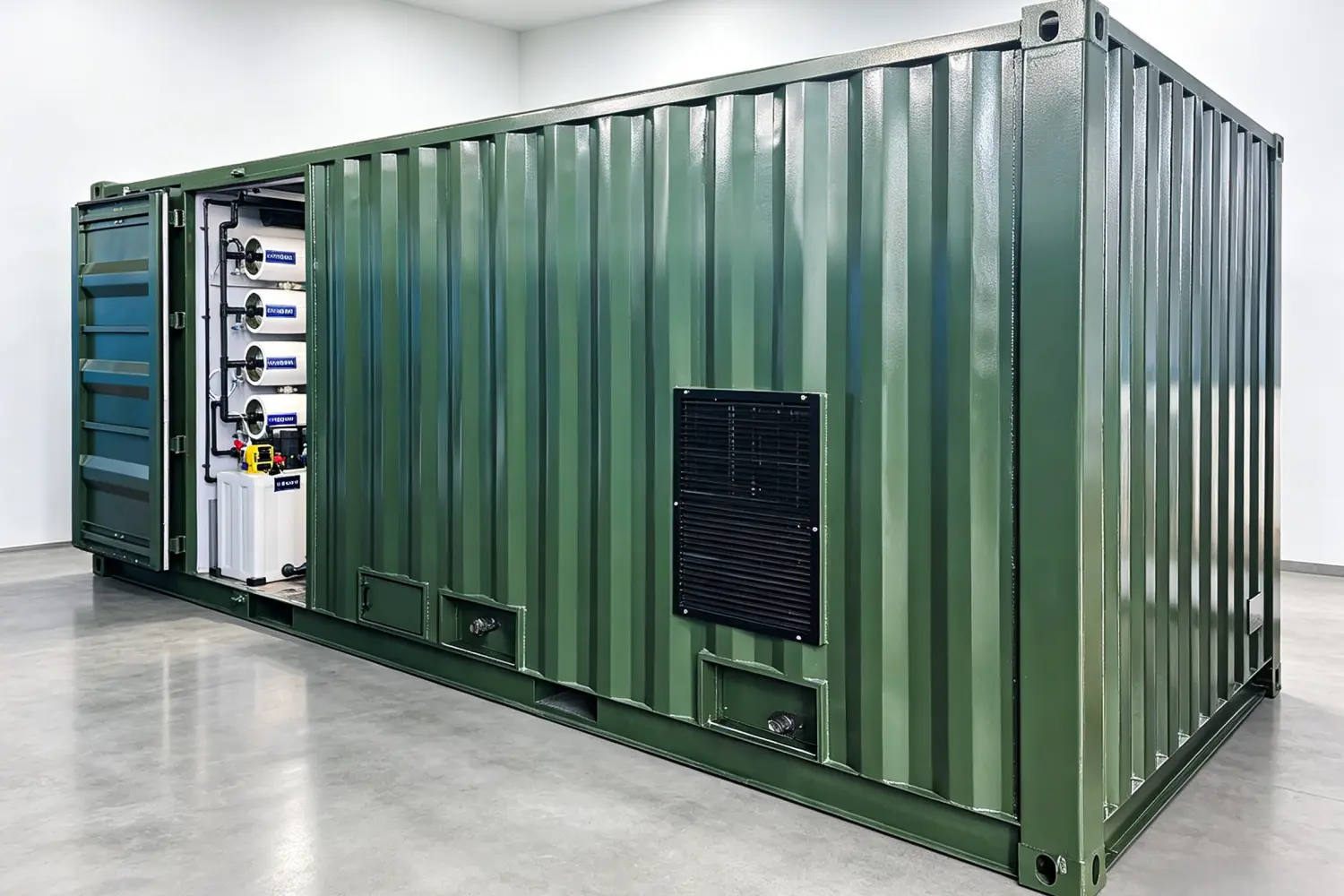
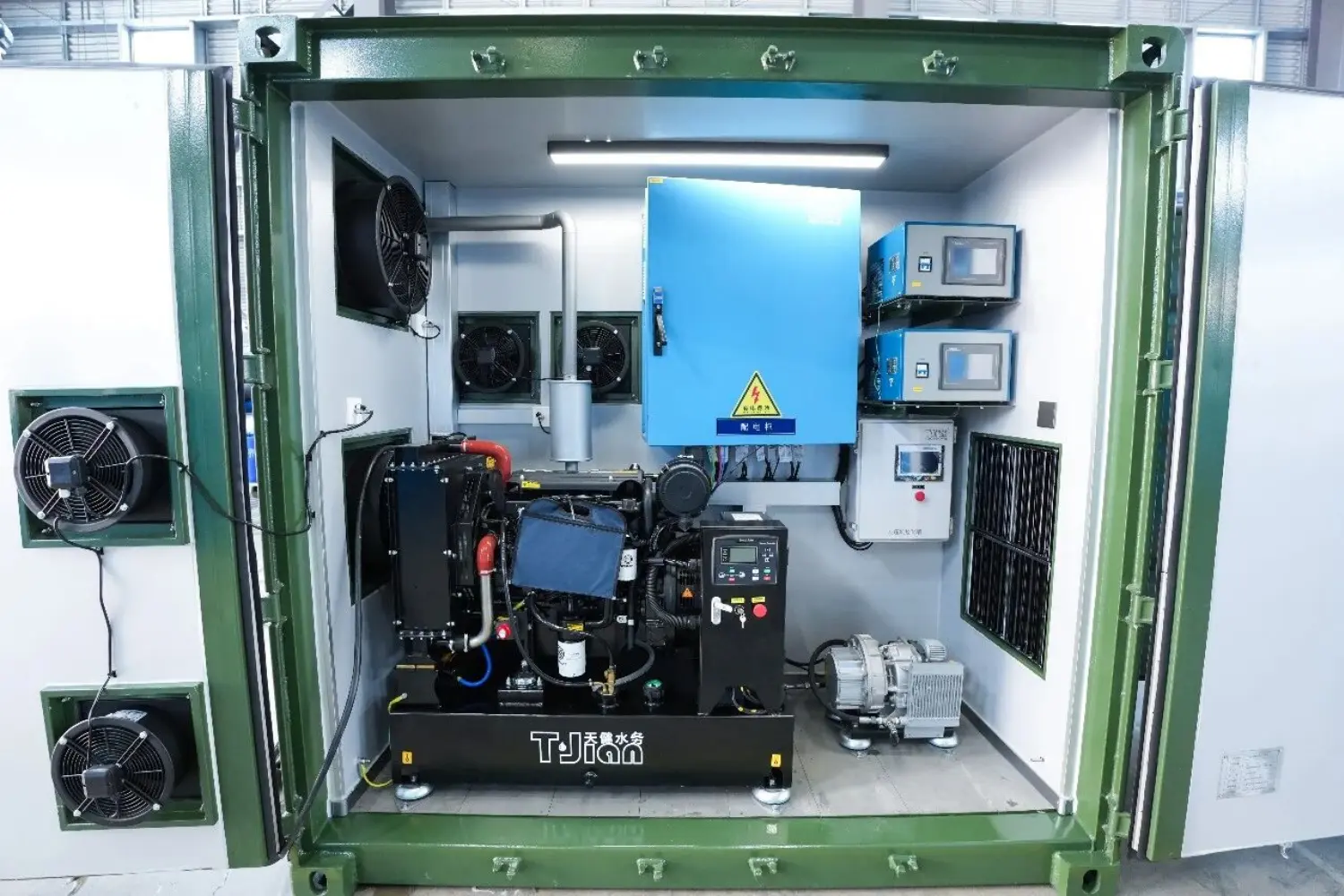
Proposed by China’s technological innovation and developed by Tianjian Water, the Distributed Mobile Integrated Field Water Supply Station solves emergency water supply challenges with cutting-edge technology and professional expertise.
Four Standardized Design Principles for Field Mobility Adaptability
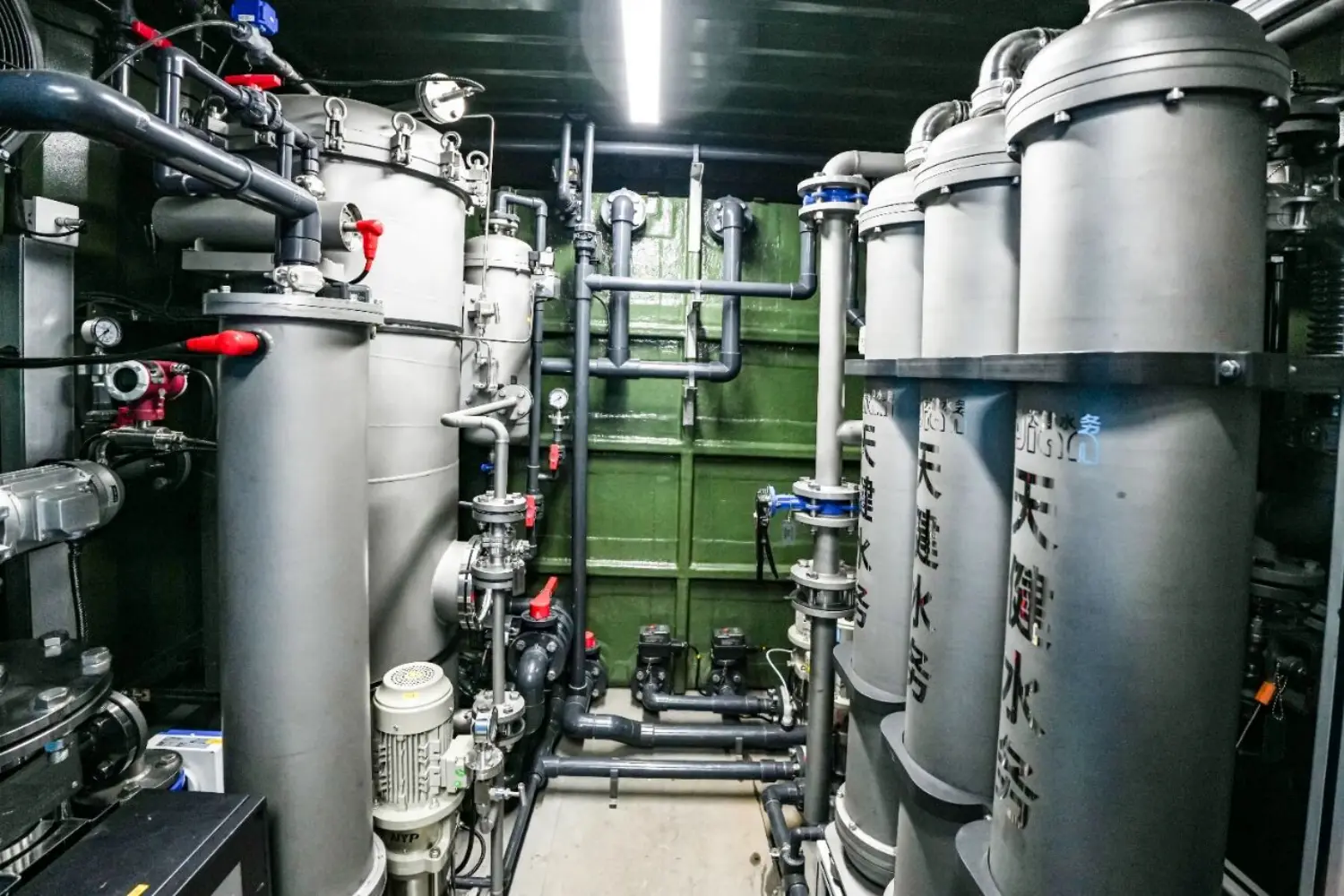
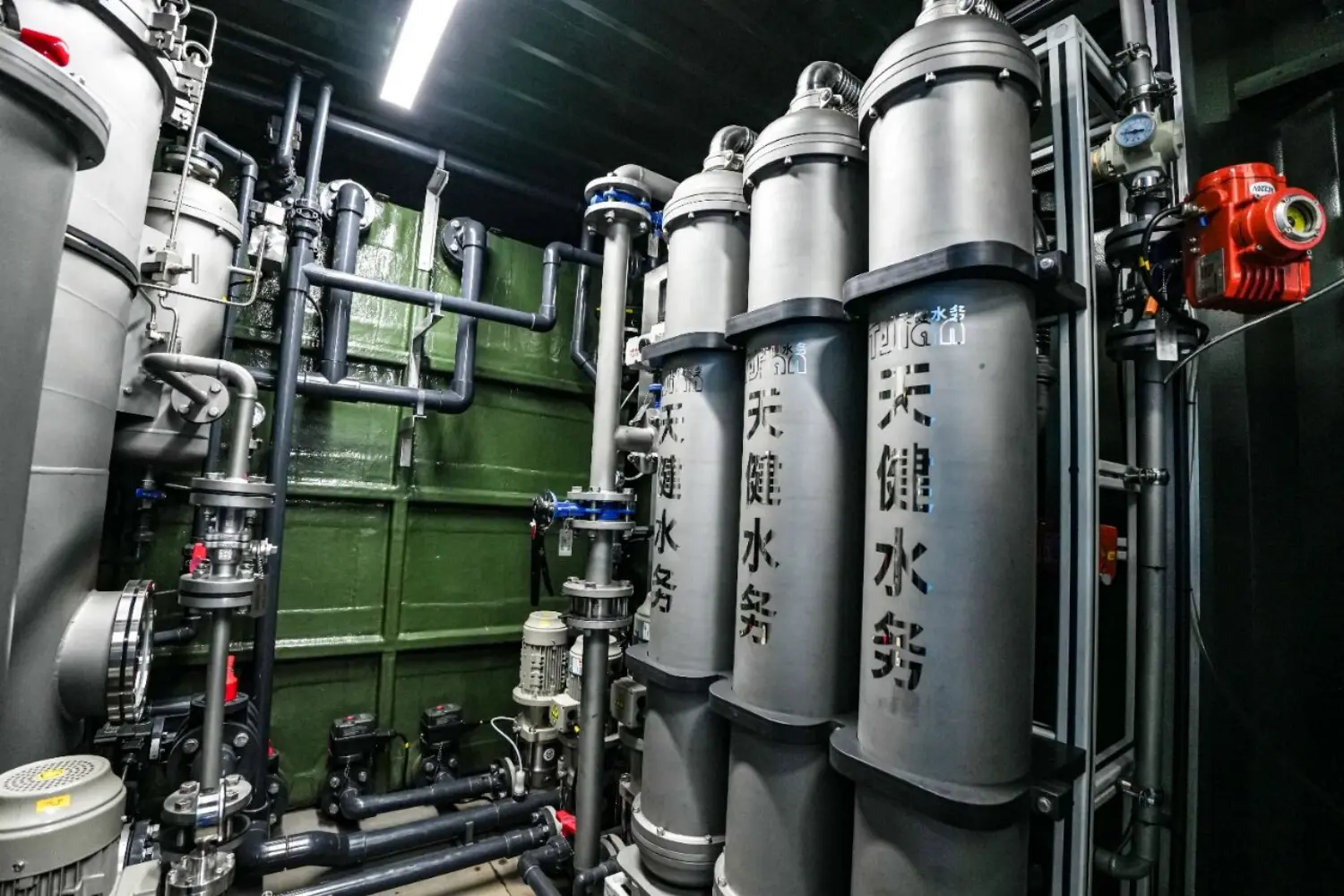
Strictly designed in accordance with four core principles – equipment-oriented design, modularization, standardization and automation – the water supply station adopts a multi-unit integrated modular structure. It highly integrates functional modules including advanced water purification, seawater desalination, water storage, self-disinfection and bagged water filling. The entire system can be mounted on a self-loading and unloading vehicle chassis for flexible transportation and rapid deployment. With a deployment and withdrawal time of no more than 30 minutes, a total weight of no more than 7 tons and compliant overall dimensions, it precisely meets the rapid water supply demands of complex scenarios such as wartime emergency response and field operations, realizing reliable distributed mobile water supply support.
Full-process Purification and Full Water Source Adaptability
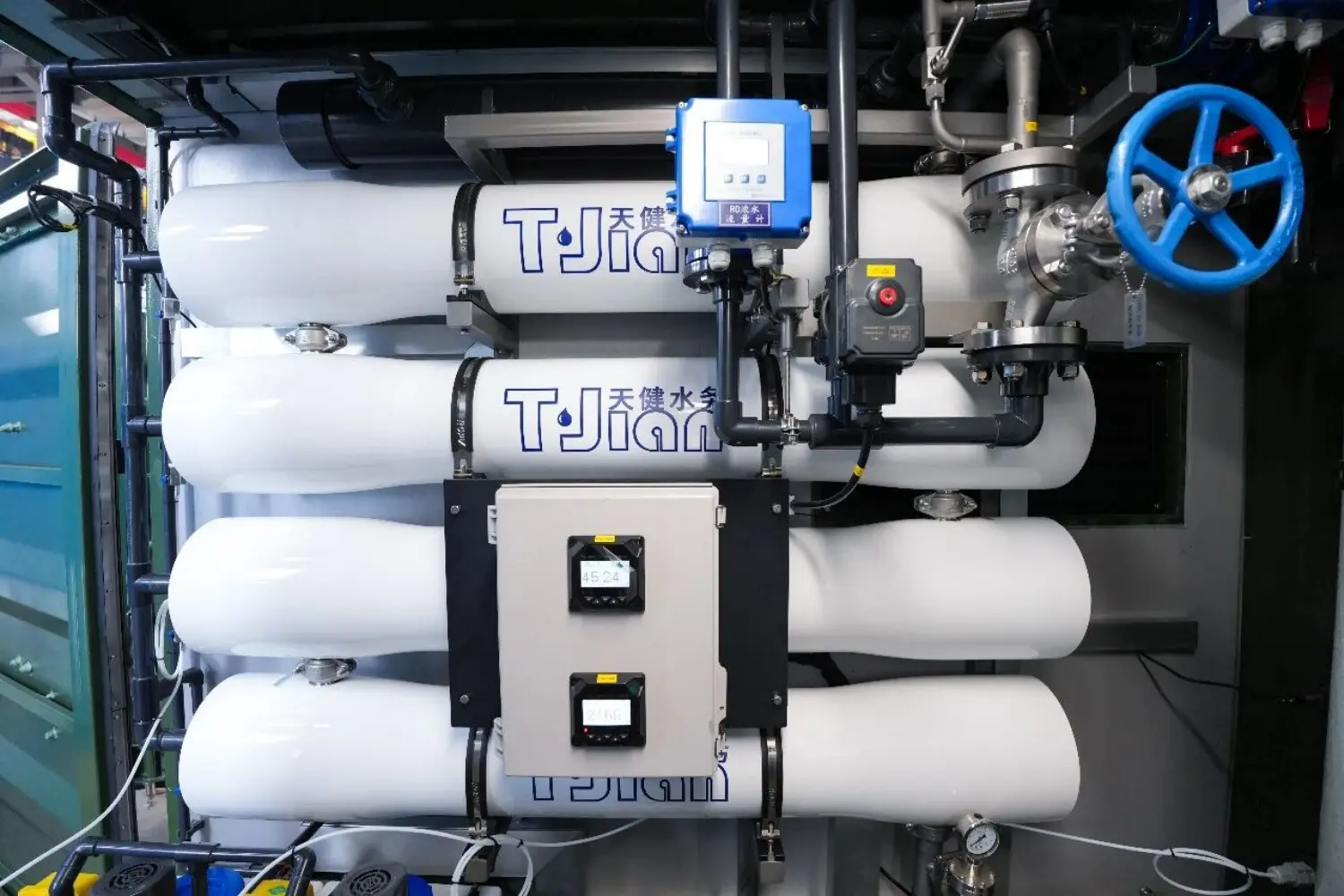
It establishes a full-process water treatment system covering front-end pretreatment, in-depth core treatment and disinfection, capable of customized treatment of Class I to V surface water and brackish water specified in GB3838-2002, as well as Class I to IV seawater specified in GB3097. The front-end pretreatment is completed via self-cleaning filters, ozonated water and rotational flow air flotation. The core equipment consists of a ceramic ultrafiltration membrane advanced purification unit (effluent turbidity ≤ 0.05 NTU) and a dedicated reverse osmosis membrane seawater desalination unit, achieving a surface water purification capacity of ≥5 tons per hour and a seawater/brackish water desalination capacity of ≥1.5 tons per hour. A mineralization device is equipped after reverse osmosis treatment to accurately adjust the pH value and mineral content of produced water and optimize taste. Supported by sodium hypochlorite disinfection technology, the produced water fully complies with the drinking water standards specified in GB5749-2022. Pure water can be directly produced after seawater desalination, effectively preventing risks of water source damage and poisoning.
Intelligent Monitoring & Efficient Filling for Full-scenario Adaptability
The rear end is integrated with dual modules of online water quality monitoring and automatic bagged water filling, which monitors water quality indicators in real time to ensure stable and safe water supply. The filling equipment supports high-speed filling at a rate of no less than 40 bags per minute for 400ml specifications and no less than 20 bags per minute for 1.5L specifications, facilitating portable water use in field environments. All units of the system operate automatically with simple operation and low maintenance requirements. The core ceramic ultrafiltration membrane features high pressure resistance, pollution resistance and a service life of over 20 years. Adaptable to complex water quality such as high-turbidity water with reasonable energy consumption configuration, it fully meets diverse water demand in field scenarios.